Historia
El Turul de 50 fillér rojo vino: retirado y después vendido
Una tinta que se oxidó, la retirada de 1905 y la sorprendente venta de las existencias restantes en 1930.…
2026.10.10.
0
Leer más →
Historia
¡Viaje en el tiempo a través de bordes perforados!
Si pensáramos que el coleccionismo de sellos es solo cosa de desvanes polvorientos del siglo pasado y de tardes tranquilas de señores mayores, estaríamos muy equivocados. En la era del detox digital y los valores tangibles, la filatelia está viviendo un renacimiento.…
2026.06.28.
0
Leer más →
Observaciones
Roturas de filigrana en las emisiones Turul de 1908 y 1909
Los daños en la filigrana de corona, la «bailarina» y el «ding-dong». ¡Conoce las roturas especiales de filigrana en los Turul de 1908-1909!…
2026.04.06.
0
Leer más →
Observaciones
Faroles de gas y errores: La odisea cromática del Turul de 6 fillér
¿Por qué el Turul de 6 fillér cambiaba de color cada año? La luz de los faroles de gas, los fallos tipográficos y el misterio del sello pardo verdoso «que nunca existió».…
2026.03.19.
0
Leer más →
Historia
¿Por qué no se emitió ningún sello húngaro nuevo entre 1900 y 1916?
Pensamiento conservador, racionalidad económica y coacción bélica: ¿por qué la serie Turul permaneció en circulación 16 años?…
2026.03.17.
0
Leer más →
Observaciones
Las pruebas de impresión de los valores en corona de la serie Turul y las desviaciones en las cifras de valor
Una inmersión profunda en el trasfondo tipográfico de la serie Turul: pruebas de impresión, tiradas experimentales sin cifra de valor y el sistema de los cuatro tipos de cifras.…
2026.03.16.
0
Leer más →
Historia
La retirada especial del Turul de 50 fillér (1916–1917)
¿Por qué desapareció el Turul de 50 fillér un año antes que el resto de la serie? Seguimos la pista de los decretos postales de la época.…
2026.03.15.
0
Leer más →
Historia
Recomendaciones de la UPU y los Turules verdes: ¿Por qué el 5 fillér se volvió verde?
¿Por qué el 5 y el 60 fillér Turul se parecen en color? Conoce el sistema internacional de colores de la Unión Postal Universal (UPU) y su influencia en los sellos húngaros.…
2026.03.15.
0
Leer más →
Observaciones
Las variantes de tipo de los sellos Turul de 30 y 35 fillér de 1906
Aprende los tipos de las indicaciones de valor de dos dígitos en la serie Turul: las diferencias entre los tipos I y II y la historia de las rarezas en hoja de 1906.…
2026.03.11.
0
Leer más →
Observaciones
Distancia entre las cifras
Tipos I y II en las cifras. Esto solo es perceptible en los números de dos dígitos, es decir, en los valores más altos en fillér.…
2026.03.11.
0
Leer más →
Observaciones
El Turul de 2 fillér: Un miniuniverso para coleccionistas de sellos
¿Por qué el «común» Turul de 2 fillér es una de las áreas de coleccionismo más fascinantes? Matices de color, errores de plancha y rarezas histórico-postales en un solo valor.…
2026.03.09.
0
Leer más →
Historia
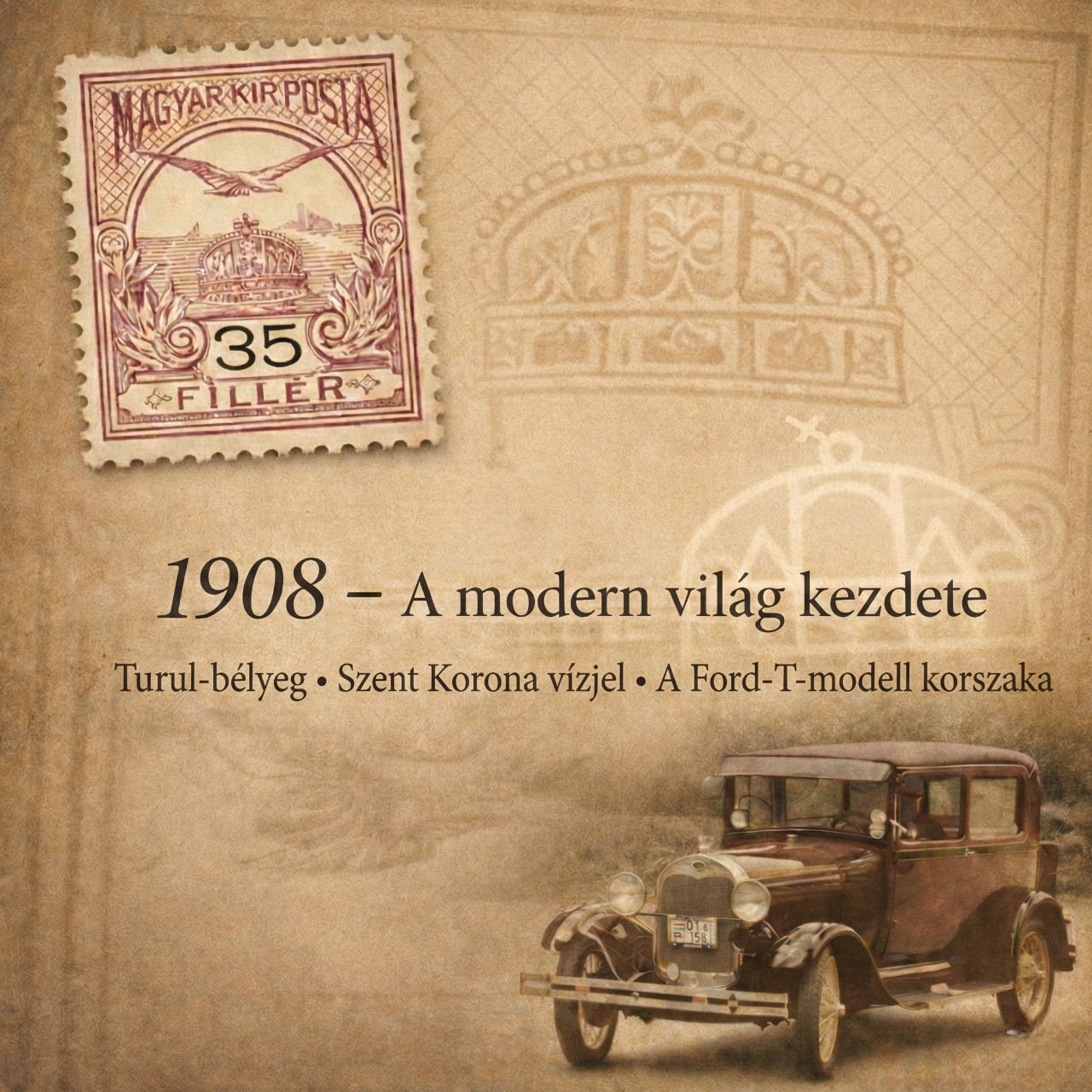
1908 – El comienzo del mundo moderno en los sellos húngaros
La emisión de la serie Turul de 1908 se convirtió en el símbolo de la condición de Estado húngaro, el progreso técnico y el mundo en modernización, en medio de los cambios de filigrana.…
2026.03.04.
0
Leer más →
Historia
El destino de la oficina de correos especial en el edificio del Parlamento
La oficina de correos en el Parlamento sigue funcionando hoy en día, aunque de forma limitada y no pública. Conoce la historia del código postal 1358.…
2026.03.01.
0
Leer más →
Historia
1905: El año de la relatividad y el Turul
Mientras un joven empleado, Albert Einstein, publicaba en la Oficina de Patentes de Berna la teoría especial de la relatividad...…
2026.03.01.
0
Leer más →
Historia
Los dos «pájaros raros» de la serie Turul de 1913
Por insistencia de los coleccionistas, los dos valores en fillér pasaron a formar parte de la serie Turul. ¿Lo sabías?…
2026.02.24.
0
Leer más →
Historia
La historia y el impacto de la filigrana horizontal
El descubrimiento de la filigrana horizontal en 1913 causó gran revuelo entre los coleccionistas.…
2026.02.24.
0
Leer más →
Historia
¡La primera jugada de marketing directo!
Las cartas enviadas masivamente causaron grandes dolores de cabeza al Correo Real Húngaro.…
2026.02.24.
0
Leer más →
Historia
Historia de los rollos de sellos
Los sellos se desarrollaron a partir de las formas tradicionales de las hojas de impresión para ser aptos para la venta automática.…
2026.02.22.
0
Leer más →
Observaciones
El origen y la historia del falc
El falc era la única solución para los coleccionistas de sellos en 1900 para fijar los sellos en los álbumes.…
2026.02.15.
0
Leer más →
Historia
La oficina de correos Budapest 62
La gran oficina de correos del oeste ha estado en el mismo lugar desde 1910 y es un gigante histórico. Fue construida para satisfacer las enormes necesidades postales que surgían en la estación.…
2026.02.15.
0
Leer más →
Historia
La edad de oro del Correo Real Húngaro: Cuando el mundo miraba a Budapest
La fiabilidad de los automóviles Csonka quedó para siempre inscrita en la historia de la técnica.…
2026.02.15.
0
Leer más →
Historia
¿Cómo se realiza una comprobación profesional de autenticidad de sellos?
Para examinar la autenticidad de los sellos se dispone de numerosas herramientas.…
2025.12.29.
0
Leer más →
Marcas de agua
¿Cómo saber con certeza que es un sello de 6 fillér de 1900?
Existen varias variantes de color en los sellos de 6 fillér de Turul, pero solo con ciertos filigranas aparecen en la emisión de 1900.…
2025.01.12.
0
Leer más →
Colores
¿Cuándo sospechar de una variante de color falsa?
No toda variación de color es una rareza. Mostramos cuándo la variación es natural y cuándo hay que tener cuidado.…
2025.01.05.
0
Leer más →
Variedades de cliché
¿Por qué es más importante la filigrana que el color?
Muchos miran primero el color, pero la filigrana ofrece una base mucho más sólida para determinar la añada.…
2024.12.28.
0
Leer más →
Observaciones
¿Cuándo es valioso un error de plancha?
No todo error significa un aumento de valor. Analizamos qué errores son buscados y cuáles son comunes.…
2024.12.10.
0
Leer más →

Comentarios
Las opiniones y experiencias pueden ayudar mucho a otros.