Istorie
Turul de 50 fillér roșu-vin: retras, apoi vândut
O cerneală oxidată, retragerea din 1905 și vânzarea surprinzătoare a stocului rămas în 1930.…
2026.10.10.
0
Citiți mai mult →
Istorie
Călătorie în timp pe margini perforate!
Dacă credeți că filatelia este doar lumea prăfuită a podurilor din secolul trecut și a după-amiezelor liniștite ale domnilor în vârstă, vă înșelați amarnic. În era detoxifierii digitale și a valorilor palpabile, filatelia își trăiește renașterea.…
2026.06.28.
0
Citiți mai mult →
Observații
Fisuri de filigran la emisiunile Turul din 1908 și 1909
Deteriorările filigranului coroană, „balerina” și „clopoțelul”. Descoperiți fisurile deosebite de filigran ale timbrelor Turul din 1908-1909!…
2026.04.06.
0
Citiți mai mult →
Observații
Lămpi cu gaz și erori: Calvarul colorat al timbrului Turul de 6 filleri
De ce își schimba culoarea în fiecare an timbrul Turul de 6 filleri? Lumina lămpilor cu gaz, gafele tipografice și misterul timbrului maro-verzui „care nu a existat niciodată”.…
2026.03.19.
0
Citiți mai mult →
Istorie
De ce nu s-a realizat niciun timbru maghiar nou între 1900 și 1916?
Viziune conservatoare, raționalitate economică și constrângerile războiului: de ce a rămas în circulație seria Turul timp de 16 ani?…
2026.03.17.
0
Citiți mai mult →
Observații
Probele de tipar ale valorilor în coroane ale seriei Turul și diferențele de cifre ale valorii
O analiză profundă a contextului tipografic al seriei Turul: probe de tipar, tipărituri experimentale fără cifre de valoare și sistemul celor patru tipuri de cifre.…
2026.03.16.
0
Citiți mai mult →
Istorie
Retragerea neobișnuită a timbrului Turul de 50 de filleri (1916–1917)
De ce a dispărut timbrul Turul de 50 de filleri cu un an mai devreme decât celelalte piese din serie? Am pornit pe urmele ordonanțelor poștale ale vremii.…
2026.03.15.
0
Citiți mai mult →
Istorie
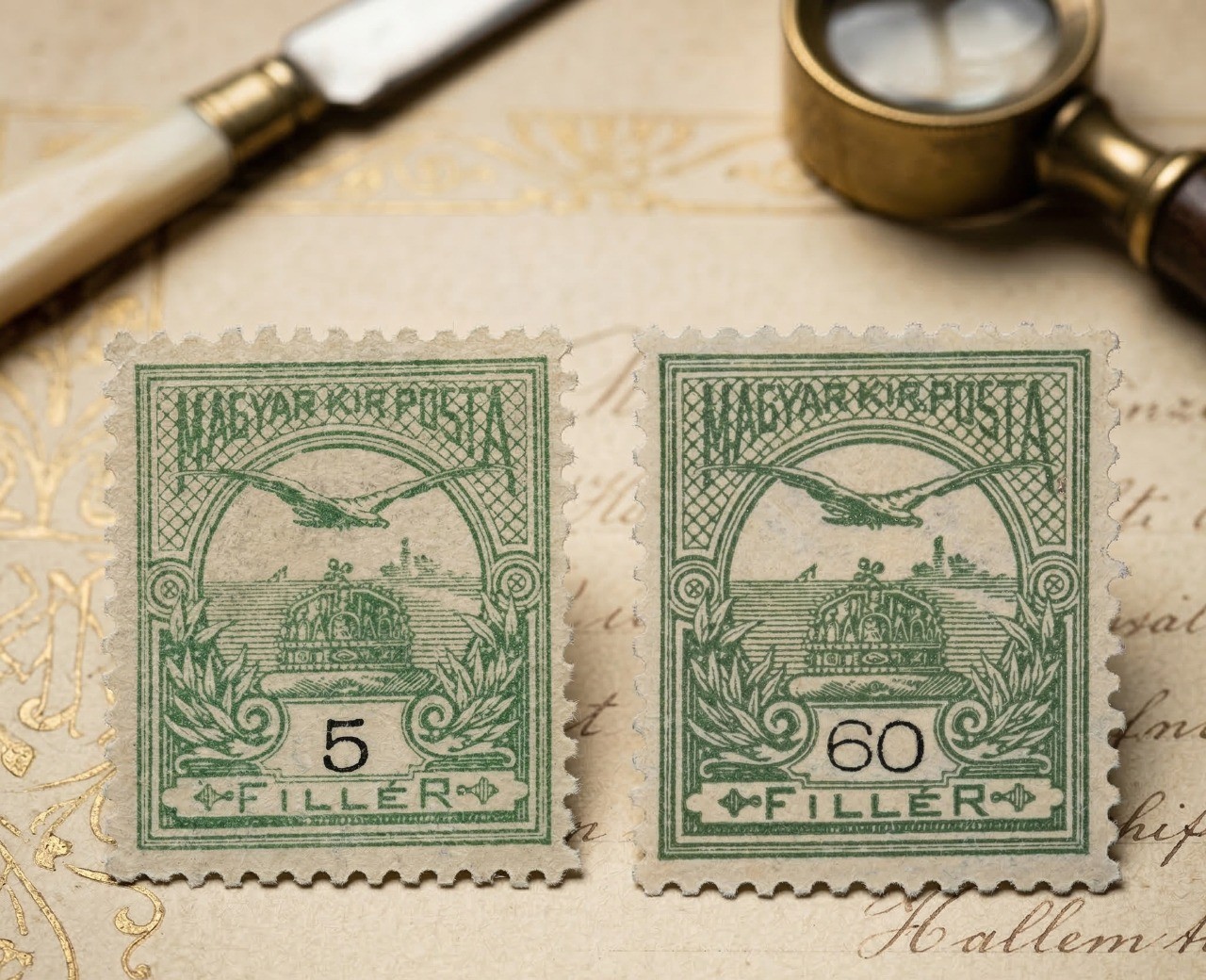
Recomandările UPU și timbrele Turul verzi: De ce a devenit verde cel de 5 filleri?
De ce se aseamănă culoarea timbrului de 5 filleri cu cea de 60 de filleri Turul? Descoperiți sistemul internațional de culori al Uniunii Poștale Universale (UPU) și impactul său asupra timbrelor maghiare.…
2026.03.15.
0
Citiți mai mult →
Observații
Variantele de tip ale timbrelor Turul de 30 și 35 de filleri din 1906
Aflați mai multe despre tipurile de valori de două cifre ale seriei Turul: diferențele dintre tipurile I și II și istoria rarităților de coli din 1906.…
2026.03.11.
0
Citiți mai mult →
Istorie
Distanța dintre cifrele valorii nominale
Tipurile I și II în cazul cifrelor. Se observă doar la numerele de două cifre, adică la valorile mai mari în filleri.…
2026.03.11.
0
Citiți mai mult →
Observații
Timbrul Turul de 2 filleri: Un mini-univers pentru colecționari
De ce este „banalul” timbru Turul de 2 filleri una dintre cele mai captivante zone de colecționare? Nuanțe de culoare, erori de placă și rarități de istorie poștală într-o singură valoare nominală.…
2026.03.09.
0
Citiți mai mult →
Istorie
1908 – Începutul lumii moderne pe timbrele maghiare
Ediția din 1908 a seriei Turul a devenit un simbol al statalității maghiare, al dezvoltării tehnologice și al lumii în curs de modernizare, reflectat în schimbările de filigran.…
2026.03.04.
0
Citiți mai mult →
Istorie
Destinul oficiului poștal special din clădirea Parlamentului
Oficiul poștal parlamentar funcționează și astăzi, deși într-un mod limitat și privat. Aflați povestea codului poștal 1358.…
2026.03.01.
0
Citiți mai mult →
Istorie
Curiozități ale anului 1905
În timp ce un tânăr funcționar de la biroul de brevete din Berna, Albert Einstein, publica teoria relativității restrânse...…
2026.03.01.
0
Citiți mai mult →
Observații
Cele două „intruse” ale seriei Turul din 1913
La presiunea colecționarilor, cele două valori au devenit parte din seria Turul. Știați asta?…
2026.02.24.
0
Citiți mai mult →
Istorie
Istoria și impactul filigranului culcat
Descoperirea filigranului culcat din 1913 a provocat o mare surpriză în rândul colecționarilor.…
2026.02.24.
0
Citiți mai mult →
Istorie
Prima tehnică de Direct Marketing!
Trimiterile masive de scrisori au cauzat mari dificultăți Poștei Regale Maghiare.…
2026.02.24.
0
Citiți mai mult →
Istorie
Istoria rolelor de timbre
Timbrele au fost adaptate din colile produse tradițional pentru a fi potrivite pentru utilizarea în automate.…
2026.02.22.
0
Citiți mai mult →
Observații
Originea și istoria șarnierei (FALC)
Șarniera a fost singura soluție a colecționarilor de timbre din anii 1900 pentru fixarea timbrelor în albume.…
2026.02.15.
0
Citiți mai mult →
Istorie
Oficiul poștal Budapesta 62
Marele oficiu poștal din Gară de Vest se află în același loc din 1910, fiind un uriaș istoric. A fost construit pentru a satisface cererea imensă de servicii poștale din gară.…
2026.02.15.
0
Citiți mai mult →
Istorie
Epoca de aur a Poștei Regale Maghiare: Când lumea privea spre Budapesta
Fiabilitatea automobilelor Csonka și-a scris pentru totdeauna numele în istoria tehnologiei.…
2026.02.15.
0
Citiți mai mult →
Istorie
Cum se desfășoară o verificare profesională a autenticității timbrelor?
Pentru examinarea autenticității timbrelor există numeroase instrumente.…
2025.12.29.
0
Citiți mai mult →
Filigrane
Cum știi cu siguranță că este un timbru de 6 fillér din 1900?
Există mai multe variante de culoare la timbrele Turul de 6 fillér, dar numai cu anumite filigrane apar în emisiunea din 1900.…
2025.01.12.
0
Citiți mai mult →
Culori
Când să suspectezi o variantă de culoare falsă?
Nu orice abatere de culoare este o raritate. Arătăm când abaterea este naturală și când trebuie să fim precauți.…
2025.01.05.
0
Citiți mai mult →
Erori de placă
De ce este filigranul mai important decât culoarea?
Mulți se uită mai întâi la culoare, dar filigranul oferă un punct de sprijin mult mai sigur pentru determinarea anului de emisiune.…
2024.12.28.
0
Citiți mai mult →
Observații
Când este valoroasă o eroare de clișeu?
Nu orice eroare înseamnă o creștere de valoare. Analizăm ce erori sunt căutate și care sunt frecvente.…
2024.12.10.
0
Citiți mai mult →

Comentarii
Opiniile și experiențele pot ajuta foarte mult pe alții.