
For the two-digit value inscription denominations of the Turul series, we distinguish between two different types, which are determined by the distance between the digits. This difference is most noticeable for the 12, 20, 30 and 35 filler stamps.
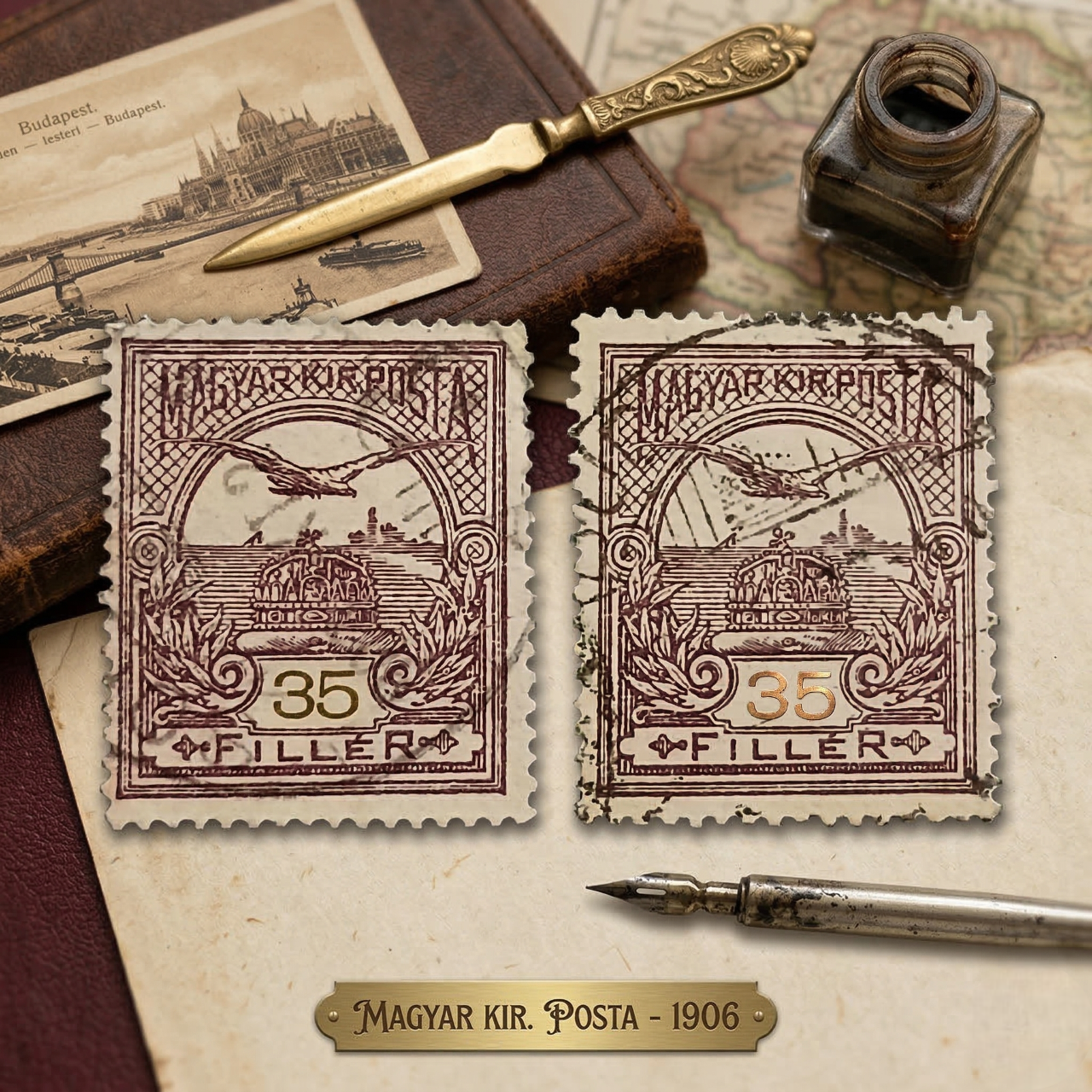
The Types of Two-Digit Value Inscriptions
The types are determined by measuring the distance between the digits:
- Type I: the distance between the two digits is 0.1 mm.
- Type II: the distance between the two digits is 0.3 mm.
This difference is also perceptible to the naked eye: Type I shows a „tighter”, Type II a „more open” digit appearance.
The 30 Filler Denomination: Exclusively Type I
The 30 filler Turul stamp was produced in only Type I in all known issues. Type II does not occur for this denomination. Here, the variety is provided by the paper, colour, and perforation variations.
The 35 Filler Denomination: The Most Varied Type Distribution
The 35 filler is one of the most complex items in the series. The chronological development of the types:
- 1900 and 1904: Type II.
- From 1906: Type I appears.
- From 1910: Type I becomes exclusive.
The Special Feature of the 1906 Issue
This year is of particular significance because it is when the rare case occurs that the Type I and Type II 35 filler stamps are known in connected (unseparated) examples on the same sheet. This proves that the replacement and repair of the printing plates did not occur simultaneously but gradually.
In addition, the typefaces are also varied: both thin and thick digits are known. Although these do not represent great monetary value, they make excellent collector's curiosities.
Summary
The basis of type examination is the distance: 0.1 mm vs. 0.3 mm. While the 30 filler is consistently Type I, for the 35 filler the mixed sheets represent the true philatelic delicacies of the year 1906.
评论
意见和经验可以对其他人有很大帮助。