
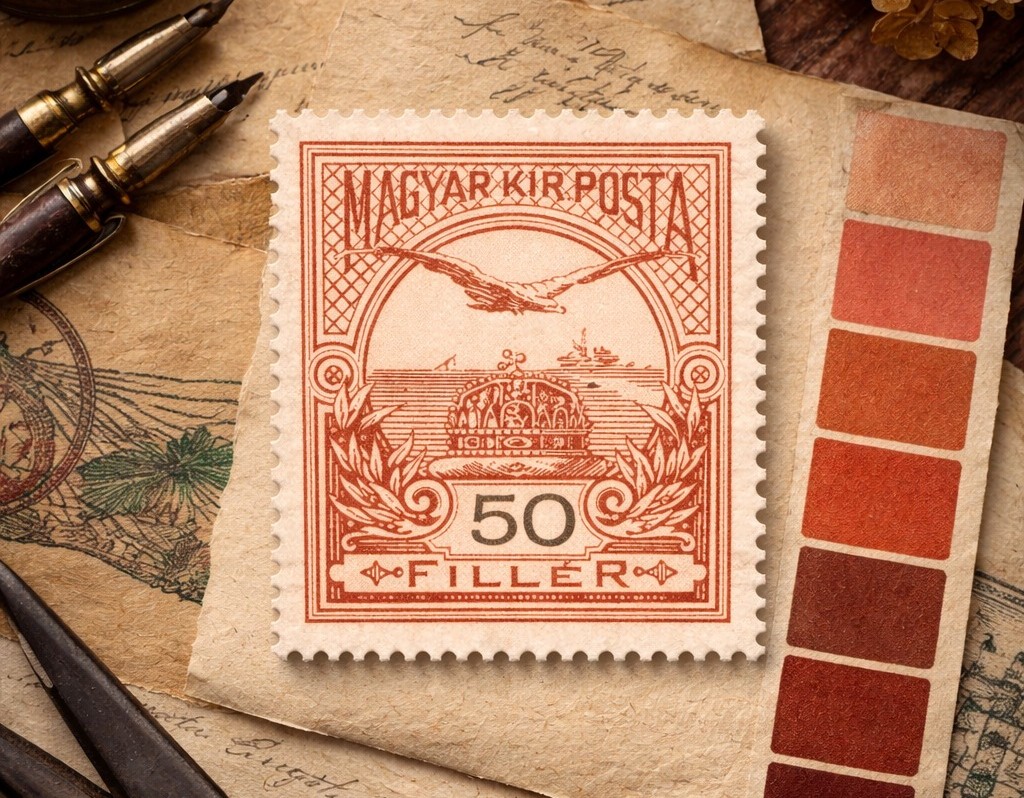
I have researched an interesting matter: sometimes a denomination is withdrawn for understandable reasons (like the 4 filler or the 3 corona), but the 50 filler was continuously produced, yet was withdrawn from circulation a year earlier than the others. Here is the reason:
Caught in the Crossfire of Decrees
Although the entire Turul series remained in circulation until the end of 1917, this one denomination disappeared a year earlier. The reason becomes clear when comparing contemporary postal decrees.
On 27 September 1916, the Post Directorate issued Decree No. 70,987, ordering the withdrawal of several Turul denominations – including the 50 filler – effective 31 December 1916. At this time, the list still included the 1, 12, 16, 30, 35, 50 and 60 filler values, as well as the 5 corona postage stamp.
The Unexpected Turn
The story took a turn on 2 January 1917, with a new decree (No. 94,879/1916). This stated that of the denominations marked for withdrawal, all should remain in circulation – with the exception of the 50 filler.
- From 1 January 1917, the stamp could no longer be used for franking.
- Specimens in public hands could be exchanged until 15 January.
- Post offices were required to keep their stocks separately.
The final point was made by the decree of 8 November 1917, which ordered the complete withdrawal of the Turul series, and specifically noted that the 50 filler stamps already withdrawn earlier should be surrendered to the value stock depots at that time.
What Was the Real Reason?
The reason for the separate withdrawal was neither a technical nor a printing error, nor was there a stock problem behind it. This was a deliberate postal decision: due to wartime rate increases, the 50 filler denomination had simply lost its function in daily traffic, so the post unilaterally withdrew it from circulation.
评论
意见和经验可以对其他人有很大帮助。