
The Hungarian Turul series' 6 filler denomination is one of the most exciting pieces in domestic philately: at first glance it seems simple, yet it carries countless stories and professional subtleties. For collectors, the particularly intriguing question is whether a given specimen truly belongs to the first 1900 issue or to one of the later printings that continued all the way until 1913.
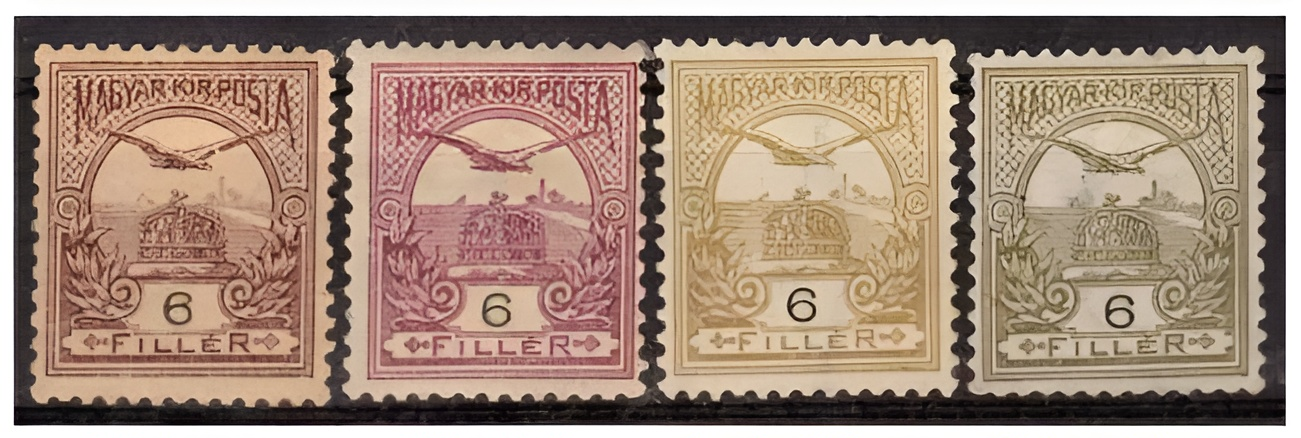
There are four main color variations of the 6 filler Turul. Among these, the last shade – a characteristic greenish-oil, oil-green tone – remained in circulation for many years and extended into later periods as well. For this reason, color alone cannot be used to determine with certainty that a specimen belongs to the 1900 issue. There is no date on the stamp image, and the shades overlap, so the collector must dig deeper.
The most important clues are provided by the paper and watermark. In early printings between 1900 and 1904, the paper is often slightly thicker, with a faint yellowish tone, and the watermark's positioning is also characteristic. Collectors frequently mention the „C position” numeral watermark, which is typically found in early printings. If a 6 filler Turul has such a watermark and an early paper type, it is very likely from the first issuance period.
The quality of the perforation is also an important indicator. Although the Turul series generally has a 12:11¾ perforation, in early printings the perforation is usually more even and less chipped. In later printings from around 1906, we find 15‑tooth perforations. This alone is not conclusive proof, but together with paper and watermark analysis it can strengthen the conclusion. If the perforation is 15‑tooth, the stamp is certainly from 1906 or later, since the 15‑tooth perforation introduced in 1906 also appears in other years.
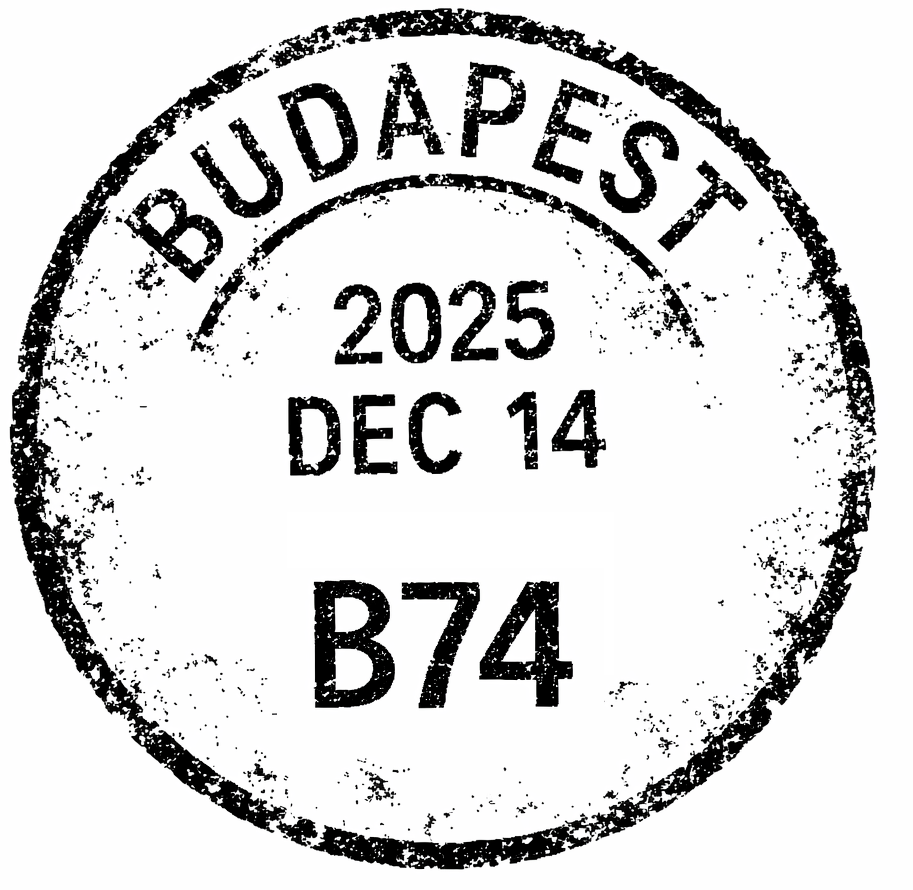
The surest evidence, however, is the postmark date. If the stamp bears a clearly legible date between 1900 and 1904, then it is practically certain that the stamp comes from the first issue period. In such cases, the postal usage date provides a narrow window: a 6 filler Turul used in 1901 cannot be a later print from the 1910s. If, however, the postmark is from around 1910 or later, then it is no longer a „certainly 1900” specimen, even if its color shade appears early.
Color shade is therefore more of a supplementary indicator than decisive evidence. Among the four known color variations, the first three are more associated with the early period, while the fourth – the greenish-oil shade – remained in circulation for a longer time, up to 1913. For this reason, the collector should be cautious: a beautiful oil-green 6 filler is not automatically a „1900 rarity” – it could also be a later specimen of the same shade.
When we put all this together, the logic of a philatelic „investigation” emerges. Anyone who wants to be sure whether their 6 filler Turul belongs to the 1900 issue must examine several factors together: the postmark date, the paper type, the watermark position, and the perforation quality. Color shade is a lovely and interesting element, but only one layer of the picture.
This is precisely what gives the Turul series its charm: it is not enough to just look at the stamp; one must also understand the postal history of the era, the printing characteristics, and the fine technical details. In this way, the 6 filler Turul transforms from a simple means of payment into a historical document – and for the collector, into an exciting intellectual challenge, where every watermark, every tooth, and every date matters.
Comments
Opinions and experiences can be of great help to others as well.