Historia
Den vinröda Turul på 50 fillér: indragen och sedan såld
Oxiderande tryckfärg, indragningen 1905 och den oväntade försäljningen av restlagret 1930.…
2026.10.10.
0
Läs mer →
Historia
Tidsresa genom perforerade kanter!
Om vi trodde att frimärkssamlande bara är dammiga vindar från förra seklet och tysta eftermiddagar med gamla herrar, har vi grundligt fel. I en tid av digital detox och påtagliga värden upplever filatelin en renässans.…
2026.06.28.
0
Läs mer →
Observationer
Vattenstämpelbrott på Turul-utgåvorna från 1908 och 1909
Skadorna på kronvattenstämpeln, „ballerinan” och „tsjingeli-ngeli”. Lär känna de speciella vattenstämpelbrotten på Turulerna från 1908-1909!…
2026.04.06.
0
Läs mer →
Observationer
Gaslampor och misstag: 6 fillér Turuls färgrika odyssé
Varför bytte 6 fillér Turul färg varje år? Gaslampornas ljus, tryckeritekniska blundrar och mysteriet med det „aldrig existerande” grönbruna frimärket.…
2026.03.19.
0
Läs mer →
Historia
Varför gjordes inget nytt ungerskt frimärke mellan 1900 och 1916?
Konservativt tänkande, ekonomisk rationalitet och krigstvång: varför förblev Turul-serien i omlopp i 16 år?…
2026.03.17.
0
Läs mer →
Observationer
Provtrycken av kronvalörerna i Turul-serien och valörsifferavvikelserna
En djupdykning i Turul-seriens tryckeritekniska bakgrund: provtryck, experimentella tryck utan valörsiffra och systemet med de fyra siffertyperna.…
2026.03.16.
0
Läs mer →
Historia
Det särskilda återkallandet av 50 fillér Turul (1916–1917)
Varför försvann 50 fillér Turul ett år tidigare än resten av serien? Vi följde spåren av samtida postbeslut.…
2026.03.15.
0
Läs mer →
Historia
UPU-rekommendationer och de gröna Turulerna: Varför blev 5 fillér grön?
Varför liknar 5 och 60 fillér Turul varandra i färg? Lär känna det internationella färgsystemet från Universalpostunionen (UPU) och dess påverkan på ungerska frimärken.…
2026.03.15.
0
Läs mer →
Observationer
Typvarianterna av 30 och 35 fillér Turul-frimärkena från 1906
Lär dig typerna av tvåsiffriga valörbeteckningar i Turul-serien: skillnaderna mellan typ I och II och historien om arksällsyntheterna från 1906.…
2026.03.11.
0
Läs mer →
Observationer
Avstånd mellan siffrorna
Typ I och II vid siffrorna. Detta är endast synligt vid tvåsiffriga tal, alltså vid de högre fillér-valörerna.…
2026.03.11.
0
Läs mer →
Observationer
2 fillér Turul: Ett miniuniversum för frimärkssamlare
Varför är den „vanliga” 2 fillér Turul ett av de mest fascinerande samlingsområdena? Färgnyanser, plåttryckfel och posthistoriska sällsyntheter i en enda valör.…
2026.03.09.
0
Läs mer →
Historia
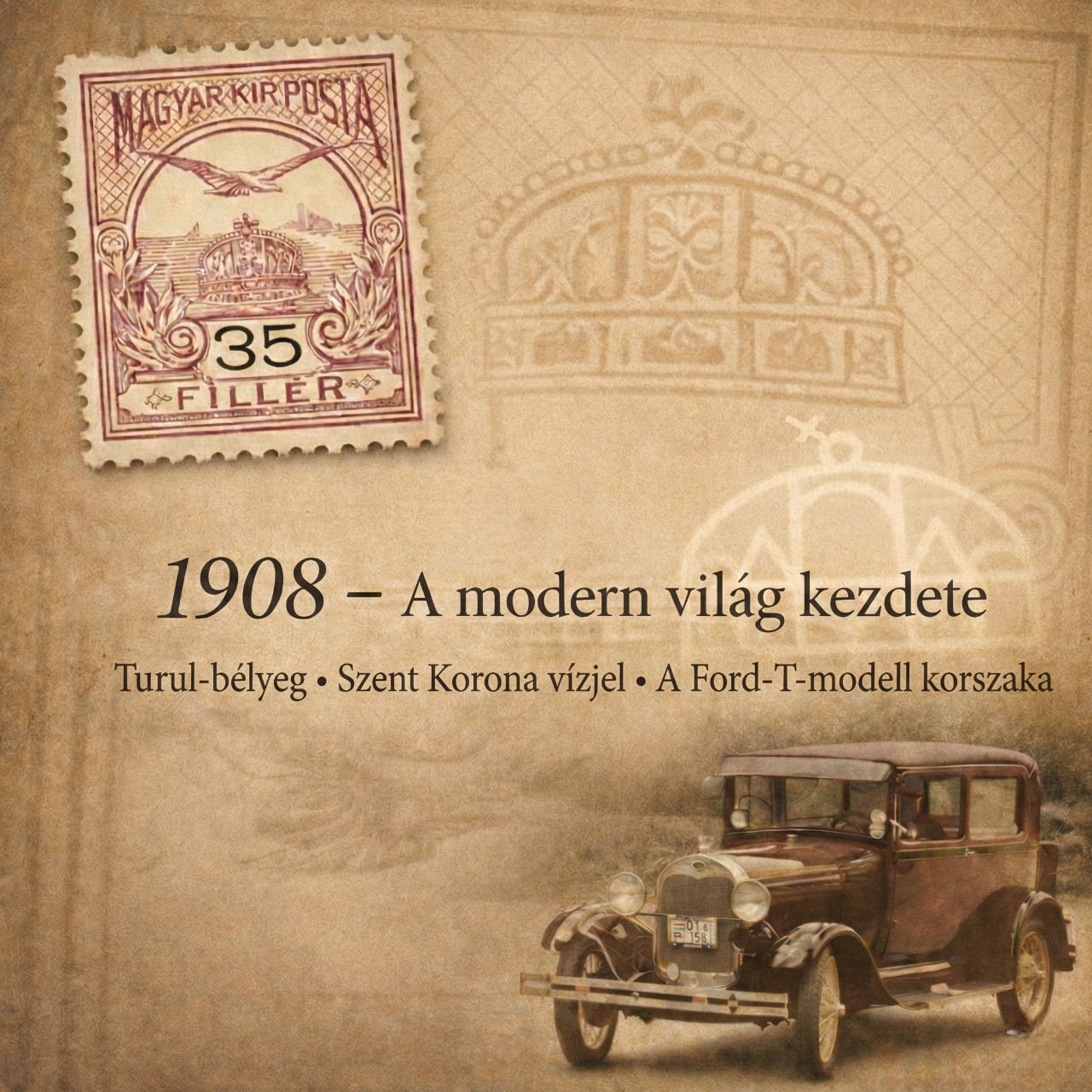
1908 – Början av den moderna världen på ungerska frimärken
1908 års utgåva av Turul-serien blev symbolen för ungersk statsbildning, teknisk utveckling och den moderniserande världen, mot bakgrund av vattenstämpelförändringar.…
2026.03.04.
0
Läs mer →
Historia
Ödet för det speciella postkontoret i parlamentsbyggnaden
Postkontoret i parlamentsbyggnaden är fortfarande i drift, om än begränsat och inte offentligt. Lär känna historien bakom postnumret 1358.…
2026.03.01.
0
Läs mer →
Historia
Året 1905: Relativitet och Turul
Medan en ung tjänsteman, Albert Einstein, vid Berns patentverk publicerade den speciella relativitetsteorin...…
2026.03.01.
0
Läs mer →
Historia
De två udda fåglarna i Turul-serien från 1913
På samlares begäran blev de två fillér-valörerna en del av Turul-serien. Visste du det?…
2026.02.24.
0
Läs mer →
Historia
Historien och effekten av det liggande vattenstämpeln
Upptäckten av det liggande vattenstämpeln 1913 väckte stor sensation bland samlare.…
2026.02.24.
0
Läs mer →
Historia
Det första direktmarknadsföringsdraget!
De massutskickade breven orsakade den Kungliga Ungerska Posten stora huvudbry.…
2026.02.24.
0
Läs mer →
Historia
Historien om frimärksrullar
Frimärkena utvecklades från de traditionella tryckarksformerna för att bli lämpliga för automatisk försäljning.…
2026.02.22.
0
Läs mer →
Observationer
Falcens ursprung och historia
Falcen var den enda lösningen för frimärkssamlare år 1900 för att fästa frimärken i album.…
2026.02.15.
0
Läs mer →
Historia
Postkontoret Budapest 62
Det stora västra postkontoret har stått på samma plats sedan 1910 och är en historisk jätte. Det byggdes för att möta de enorma postala behoven som uppstod vid stationen.…
2026.02.15.
0
Läs mer →
Historia
Den kungliga ungerska postens gyllene era: När världen tittade på Budapest
Csonka-bilarnas tillförlitlighet har för alltid skrivit in sig i teknikhistorien.…
2026.02.15.
0
Läs mer →
Historia
Hur går en professionell äkthetskontroll av frimärken till?
För att undersöka äktheten av frimärken står många hjälpmedel till förfogande.…
2025.12.29.
0
Läs mer →
Vattenmärken
Hur vet du säkert att det är en 6-fillér från 1900?
Det finns flera färgvarianter av 6-fillér Turul-frímärkena, men endast vissa vattenstämplar förekommer i 1900 års utgåva.…
2025.01.12.
0
Läs mer →
Färger
När ska man misstänka en falsk färgvariant?
Inte varje avvikande färg är en sällsynthet. Vi visar när en avvikelse är naturlig och när försiktighet är på sin plats.…
2025.01.05.
0
Läs mer →
Plåtfel
Varför är vattenstämpeln viktigare än färgen?
Många tittar först på färgen, men vattenstämpeln ger mycket bättre hållpunkter för att bestämma årgången.…
2024.12.28.
0
Läs mer →
Observationer
När är ett plåttryckfel värdefullt?
Inte varje fel innebär en värdeökning. Vi tittar på vilka fel som är eftertraktade och vilka som är vanliga.…
2024.12.10.
0
Läs mer →

Kommentarer
Åsikter och erfarenheter kan hjälpa andra mycket.